The conversation around digital health often feels like it belongs in a sci-fi novel rather than a busy urban clinic or a multi-specialty hospital. We hear endlessly about generative AI diagnostics, automated workflows, and fully virtual care.
But for those of us on the ground managing healthcare delivery, the reality is much more grounded.
We don't need technology that replaces the human touch; we need technology that removes the friction surrounding it. The future of healthcare isn't purely digital, nor is it strictly traditional. It is Phygital—the seamless integration of physical clinical excellence with intelligent digital infrastructure.
The Friction in Today’s Healthcare Ecosystem
Whether you are managing a standalone clinic, heading a corporate hospital network, or leading medical association initiatives, the core challenges remain remarkably consistent:
The Fragmented Patient Journey: Patients still navigate a disjointed maze of physical paperwork, isolated diagnostic labs, and disconnected follow-ups.
Administrative Burnout: Clinical talent spends more time clicking through poorly optimized electronic records or managing manual workflows than engaging in direct patient care.
The Implementation Gap: There is no shortage of brilliant health-tech tools. The breakdown happens in adoption—building the operational workflows, training faculty, and alignment that make technology stick.
To scale a healthcare practice or institution today, we have to look past the software features and focus on the care architecture.
The Three Pillars of a True Digital Health Strategy
When I advise healthcare leadership on digital transformation, we move away from "tech for tech's sake" and focus on three operational anchors:
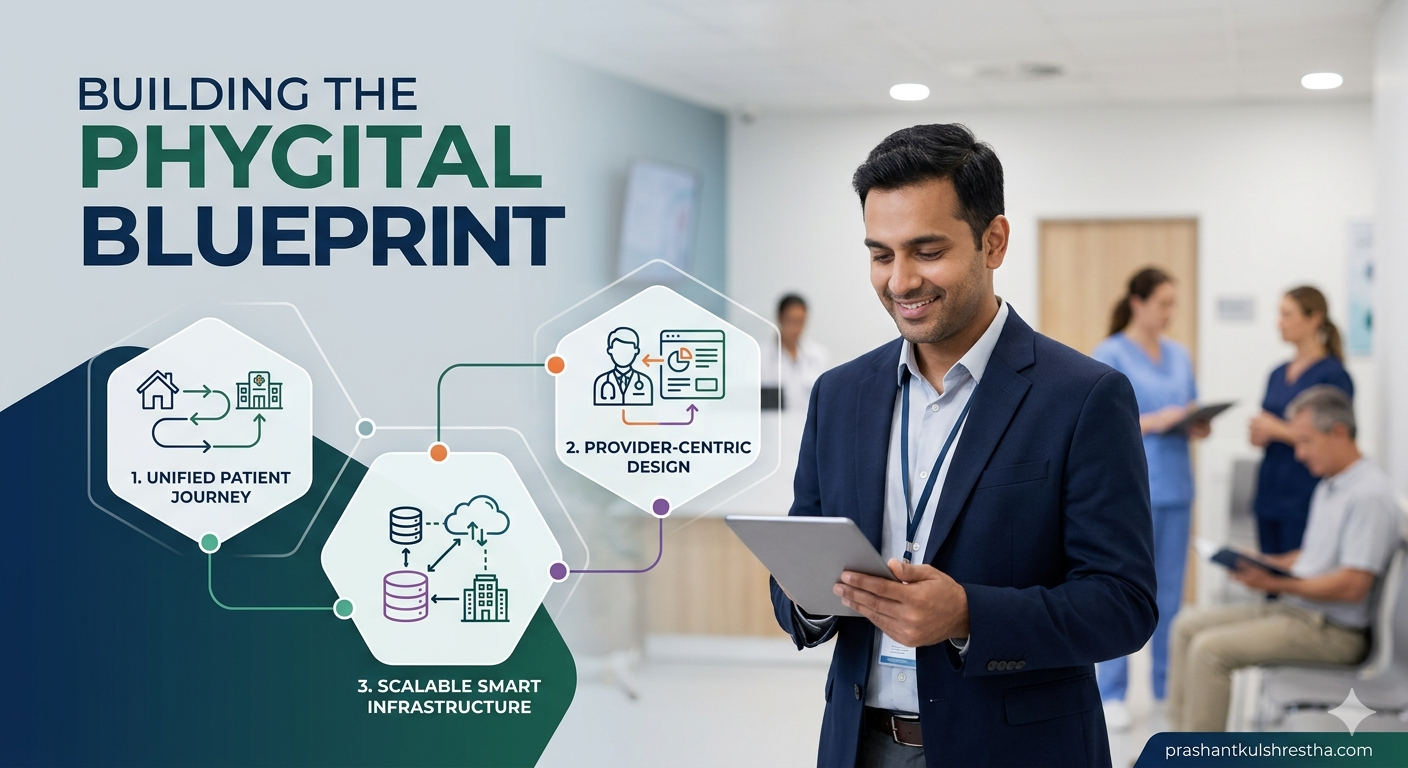
1. Unified Patient Journeys
A successful digital initiative should make a patient's transition from an online booking to a physical waiting room, and eventually to remote post-care monitoring, feel completely invisible. The goal is to turn episodic medical treatments into continuous, proactive health management.
2. Provider-Centric Design
If a digital tool adds five minutes of administrative overhead to a doctor’s consultation, it has failed. True digital health initiatives optimize clinical workflows, integrating seamless data entry and smart compliance tools so medical professionals can focus entirely on clinical decision-making.
3. Scalable "Smart" Infrastructure
From setting up digitally powered primary health clinics to launching proactive care models for vulnerable populations, success relies on interoperable frameworks. Building systems that can securely talk to one another ensures your ecosystem is ready for tomorrow's innovations without needing a complete overhaul.
Bridging the Strategy Gap
Designing these systems requires a rare intersection of skills: deep clinical understanding, operational administrative experience, and a clear vision for digital architecture.
It is about knowing how to structure learning objectives for your team, how to evaluate medical technology partnerships, and how to build public-private or cooperative healthcare models that actually scale.
If you are looking to optimize your institution's digital footprint, design a patient-centric care model, or smoothly navigate the shift toward automated healthcare workflows, let’s build that blueprint together.
Let’s Transform Healthcare Delivery
Are you planning a digital health initiative, setting up a smart clinic model, or seeking strategic guidance on healthcare transformation?
Connect for a Strategic Consulting Session to discuss how we can align your clinical goals with scalable digital infrastructure.